
SK hynix priced 177.9 million American Depositary Shares at $149 each. Every ADS represents one-tenth of one Korean common share, so 10 SKHY shares correspond to one KRX:000660 share.[1] Trading began on Nasdaq on July 10 at $170.[2]
For this review, “the first two weeks” means the two-week window from the July 10 debut through Friday, July 24: 11 U.S. trading sessions. Price and volume come from Nasdaq's historical market data page.[3] Premium calculations use the official ADS ratio plus same-date SKHY, KRX:000660, and USD/KRW closes where all three were available.[4][5]
The Price Path Was a Round Trip, Not a Straight Debut Pop
SKHY closed its first session at $168.01, 12.8% above the $149 offer price but slightly below its $170 opening trade. By July 14, the closing price had reached $193.92, 30.1% above the offer. It then fell to $152.31 two sessions later.
The most important feature is the speed of those reversals. SKHY gained 27.3% from the July 13 close to July 14, then lost 9.0% on July 15 and another 13.7% on July 16. After rebounding to $171.94 on July 21, it finished the period at $154.57.
Two-week result: SKHY ended 3.7% above its offer price but 8.0% below its first close. A positive IPO-to-date return and a falling post-debut price can both be true, depending on the starting point.
Volume Started Huge, Then Fell by More Than Half
The debut session traded 107.7 million shares—about 60.5% of the 177.9 million ADS offering size. That comparison is a scale indicator, not a count of unique shares changing owners: one ADS can trade repeatedly during a session.
Across all 11 sessions, reported volume totaled 610.5 million shares and averaged 55.5 million a day. The six-session launch block from July 10 through July 17 averaged 74.0 million shares. The five sessions from July 20 through July 24 averaged 33.3 million, a 55.1% decline.
Lower second-week volume is consistent with launch activity cooling, but it is not proof that the market had reached equilibrium. Volume remained responsive to price stress: July 15 traded 76.3 million shares as the ADR fell from its peak, and July 17 traded 74.0 million while SKHY ranged from $145.57 to $167.37. The early tape still looked like price discovery.
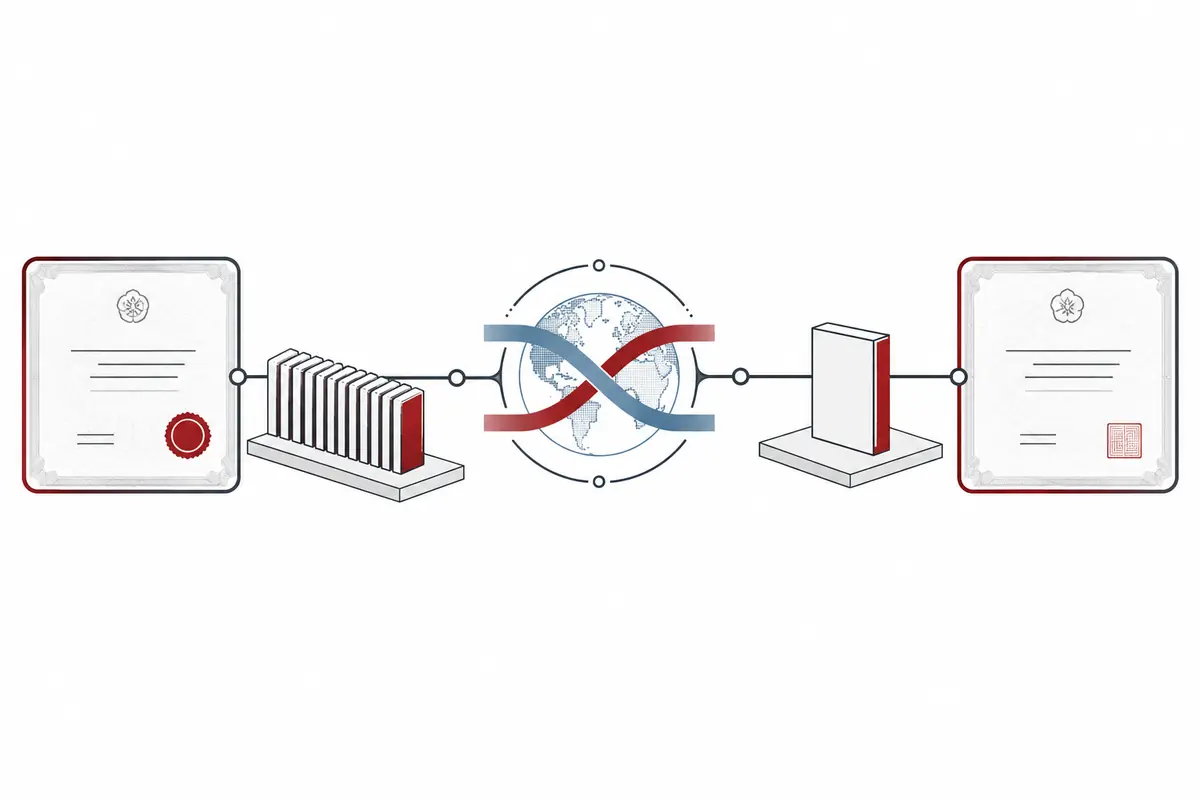
The Premium Moved More Than the ADR Alone
The SKHY premium compares the U.S. ADS with the currency-adjusted value of one-tenth of a Korean share. The calculation is:
ADR premium = SKHY close ÷ parity per ADS − 1
On the 10 dates with same-calendar-date closes for SKHY, 000660, and USD/KRW, the premium averaged 29.8% and had a median of 27.6%. It opened at 15.8%, peaked at 51.1% on July 14, and ended at 28.5%. The 35.4 percentage-point range was much wider than a stable “access fee” narrative would suggest.
The premium did not merely mirror SKHY. On July 13, SKHY fell 9.3%, but 000660 fell even more, so the calculated premium widened from 15.8% to 23.8%. On July 14, SKHY jumped 27.3% while the Korean share rose 3.7%; the premium expanded to 51.1%. The next day, SKHY fell while 000660 rose, compressing the premium to 26.2%.
USD/KRW moved from 1,502.0 to 1,462.5 across the matched period, a 2.6% decline in won per dollar. That stronger won reduced the ADR's converted Korean value, all else equal. Yet the much larger premium swings came from the two securities moving at different speeds.
All 11 Sessions, Side by Side
| Date | SKHY close | Volume | 000660 close | USD/KRW | Premium |
|---|---|---|---|---|---|
| Jul 10 | $168.01 | 107.7M | ₩2,180,000 | 1,502.0 | 15.8% |
| Jul 13 | $152.35 | 57.3M | ₩1,845,000 | 1,499.5 | 23.8% |
| Jul 14 | $193.92 | 72.6M | ₩1,913,000 | 1,491.0 | 51.1% |
| Jul 15 | $176.46 | 76.3M | ₩2,082,000 | 1,488.5 | 26.2% |
| Jul 16 | $152.31 | 56.3M | ₩1,842,000 | 1,491.0 | 23.3% |
| Jul 17 | $154.03 | 74.0M | Closed | — | — |
| Jul 20 | $151.16 | 37.8M | ₩1,764,000 | 1,478.5 | 26.7% |
| Jul 21 | $171.94 | 38.9M | ₩1,836,000 | 1,482.5 | 38.8% |
| Jul 22 | $165.27 | 27.1M | ₩1,830,000 | 1,479.0 | 33.6% |
| Jul 23 | $169.50 | 36.2M | ₩1,919,000 | 1,476.5 | 30.4% |
| Jul 24 | $154.57 | 26.3M | ₩1,759,000 | 1,462.5 | 28.5% |
Premiums are our calculations from the displayed closes and the official 10:1 ADS ratio. Values are rounded; totals and averages use unrounded source data.
What to Watch After the First Two Weeks
1. Whether the premium narrows on matched closes
A live premium can compare a current U.S. quote with an already-closed Korean market. That is useful, but it mixes information sets. For trend analysis, compare both the live reading and the next set of matched closes. A persistent gap across many aligned observations means more than a one-session spike.
2. Price moves relative to normalized volume
The July 20-24 average volume was less than half the six-session launch-block average. The next question is not whether volume keeps falling every day, but whether large price moves still require launch-scale turnover. A quieter tape with a stable premium would look different from repeated high-volume repricing.
3. Which leg is driving the spread
Track SKHY, 000660, and USD/KRW separately. A rising premium can come from the ADR rallying, the Korean share falling, the won weakening, or a combination. The label “SKHY premium up” hides those very different paths.
4. Depositary-share supply and conversion friction
The 10:1 ratio defines parity, but it does not guarantee instant convergence. Issuing or cancelling ADSs involves the depositary system, settlement, fees, market access, and operational timing.[1] Those frictions matter most when a visible spread looks easiest to trade. The site's premium explainer covers why an apparent gap is not a guaranteed arbitrage return.
5. A longer sample
Eleven U.S. sessions are enough to describe the debut, not enough to declare a normal premium or normal volume. The first two weeks include IPO allocation turnover, launch publicity, a Korean market holiday, and unusually large price moves. Use the premium history to test whether these early ranges persist, compress, or change character.
Bottom Line
SKHY's first two weeks produced three clear observations. The ADR retained only a small gain over its $149 offer price after a volatile round trip. Trading volume was enormous but cooled sharply in the second week. And the matched-close premium remained positive throughout, while moving between 15.8% and 51.1% as the U.S. and Korean securities repriced at different speeds.
That is a baseline, not a valuation verdict. The useful discipline is to separate the value of SK hynix from the price of U.S. access to it—and to keep quote timing visible whenever the two are compared.
References
- SK hynix Inc., Final prospectus, July 9, 2026. See the cover for the $149 offer price, 177.9 million ADS offering, and one-tenth-share ADS ratio.
- Nasdaq Newsroom, Global Innovation Meets Global Capital: SK hynix Lists on Nasdaq, July 10, 2026.
- Nasdaq, SKHY Historical Stock Price Data, July 10-24, 2026 data, accessed July 27, 2026.
- Naver Finance, SK hynix (000660) Daily Prices, July 10-24, 2026 data, accessed July 27, 2026.
- Naver Finance, USD/KRW Exchange Rate, daily rates for July 10-24, 2026, accessed July 27, 2026.
- Korea Exchange, KOSPI trading days, holiday rules, and hours, accessed July 27, 2026.
- Yonhap News Agency, S. Korean stock markets to close on June 3 for local elections, May 20, 2026. The notice also identifies the July 17 Constitution Day closure.